
Spring Walk Check-Up: What to Check When Your Dog Comes Home
Spring means longer days, warmer weather and more opportunities to get outside with your dog. But it also brings a few seasonal hazards that can hitch a ride home after a seemingly ordinary walk.
Grass seeds can become lodged in paws, ears and other parts of the body. Ticks may be picked up in vegetation. Pollen, grasses and plants can irritate sensitive skin, while small cuts, grazes and sore paws aren’t always immediately obvious.
The good news? A quick check when you get home can help you spot potential problems early.
The 30-Second Answer
After spring walks, get into the habit of checking your dog’s:
- Paws and between the toes for grass seeds, cuts, swelling and irritation.
- Ears for grass seeds, ticks, redness or sudden sensitivity.
- Coat and skin for ticks, seeds, burrs, bites and unusual lumps.
- Eyes and face for irritation, discharge or plant material.
- Belly, groin and armpits for ticks, redness, rashes and grass seeds.
Pay attention to your dog’s behaviour too. Sudden licking, scratching, head shaking, limping, sneezing or sensitivity after a walk can be a clue that something isn’t right.
Why Are Spring Walks Different?
Australian dogs can encounter seasonal hazards throughout the year, but spring brings increased vegetation growth, flowering grasses, warmer temperatures and greater insect and parasite activity in many parts of the country.
Dogs are also often spending more time outdoors as the weather improves.
Allergies continue to be one of the main reasons for insurance-related claims, ranking first for dogs of all ages. The average cost of treatment ranges from $700 to an eye-watering $15,894*. Pet Insurance Australia also sees regular increases in spring for a range of conditions, including grass seeds, ticks, and complications from parasite infestations.
A short post-walk check doesn’t replace appropriate parasite prevention or veterinary care, but it can give owners an opportunity to notice something unusual before it becomes a bigger problem. The sooner allergies or related issues are noticed, the easier diagnosis and treatment.
1. Check Your Dog’s Paws
Start at ground level. Dogs walk through long grass, weeds, gravel, sticks, hot surfaces and all sorts of debris. Their paws are therefore one of the first places to examine after a walk.
Gently check:
- Between each toe
- Around the paw pads
- Under and around the nails
- The top of the paw
- Around any longer fur between the toes
Look for grass seeds, burrs, small cuts, redness, swelling, cracked pads or anything caught in the fur.
Also watch what your dog does once you get home. Repeatedly licking or chewing one paw, suddenly limping or holding a paw off the ground can indicate pain or irritation.
Why Grass Seeds Can Be a Problem
Grass seeds may look harmless, but their pointed shape can allow them to become caught in fur or penetrate the skin.
Once embedded, some grass seeds can migrate further into surrounding tissue rather than simply falling back out. Dogs with hairy paws, long coats or feathering around their legs and feet may be particularly good at collecting them. It is advisable during the spring and summer months to keep the hair cut short around your pet’s feet to help prevent grass seed penetration.
Pet Insurance Australia routinely records a significant rise in grass-seed-related claims during late spring and summer, particularly across New South Wales, Victoria, South Australia, and Western Australia, regions where dry grasses are abundant.
These injuries can range from $300 for simple removal under sedation to over $6,000^ for complex surgeries.
If a seed appears superficially caught in the coat and can be easily brushed away, remove it. However, if you suspect one has penetrated the skin or your dog has developed swelling, pain, persistent licking or lameness, contact your veterinarian.
2. Take a Look Inside Those Ears
Those gorgeous floppy ears deserve some attention after a spring adventure.
Grass seeds can become lodged around or inside a dog’s ear, particularly after running through long grass.
Signs something may be bothering your dog’s ear include:
- Sudden or repeated head shaking
- Scratching at one ear
- Holding the head to one side
- Crying or reacting when the ear is touched
- Redness
- Discharge
- An unusual smell
- Sudden sensitivity around the head
A dog that begins violently shaking its head immediately after running through long grass warrants particular attention.
Don’t insert tweezers, cotton buds or other objects deep into the ear canal in an attempt to retrieve something you cannot easily see and safely remove. A veterinarian can examine the ear properly and determine whether a foreign object is present.
3. Run Your Hands Over the Coat
A visual check is useful, but your hands can sometimes find things your eyes miss.
Slowly run your hands over your dog’s body, paying particular attention to:
- Head and neck
- Around and behind the ears
- Chest
- Armpits
- Belly
- Groin
- Legs
- Between the toes
- Around the tail
You’re feeling for anything that wasn’t there before, including ticks, grass seeds, burrs, small wounds, swelling or unusual lumps.
For dogs with thick or long coats, separate the fur so you can see the skin underneath.
4. Make Tick Checking Part of the Routine
Ticks are an important consideration for Australian dog owners, particularly in tick-prone regions. Dogs can encounter ticks in areas with vegetation, including bushland, scrub, long grass and backyards.
While checking your dog after being outdoors is a useful habit, physical checking should complement, not replace, appropriate tick prevention. Tick prevention saves lives.
Talk to your veterinarian about parasite prevention suitable for your dog and your local area. It is important to remember that tick bites can be difficult to detect, so it’s best to look for the symptoms of tick paralysis if you live in a tick-prone area.
Symptoms include:
- Weakness in the legs
- Vomiting or loss of appetite
- Difficulty breathing or excessive drooling
- A change in your pet’s bark or meow
Depending on the tick species and circumstances, signs of tick-related illness can vary. With paralysis ticks, warning signs can include changes to the dog’s voice or bark, weakness or wobbliness, vomiting or retching, changes in breathing and progressive difficulty walking.
Tick paralysis is a veterinary emergency. If you find a tick or your dog develops signs of illness and you are concerned about possible tick exposure, seek veterinary advice promptly.
5. Don’t Forget the Belly, Groin and Armpits
These softer, less visible areas are easy to overlook. They can come into contact with grass and vegetation when dogs run, roll, lie down or push through undergrowth.
Part the fur and look for:
- Redness
- Small bumps
- Scratches
- Seeds or plant material
- Ticks
- Insect bites
- Areas your dog is persistently licking
Spring can also be a challenging season for dogs affected by environmental allergies.
Contact with grasses, pollens and other environmental allergens may contribute to itchy skin in susceptible dogs.
If your dog regularly comes home from walks and starts licking their paws, scratching their belly, rubbing their face or developing red skin, it may be worth discussing the pattern with your veterinarian rather than assuming it is simply normal spring itchiness.
6. Check the Eyes and Face
Dogs tend to investigate the world face-first. After walking through long grass or dense vegetation, have a quick look around the eyes, nose and muzzle.
Watch for:
- Squinting
- Excessive blinking
- Pawing at the face
- Watery eyes
- Redness
- Discharge
- Swelling
- Visible plant material
Don’t ignore an eye that suddenly becomes painful or stays closed. Eye injuries and foreign bodies can require prompt veterinary assessment. Avoid attempting to remove anything that appears embedded in the eye.
7. Look for Changes in the Way Your Dog Moves
Not every problem will be visible. Before you go about your day, watch your dog walk around the house or garden and ask:
“Are they moving normally?”
Look for:
- Limping
- Stiffness
- Reluctance to put weight on a leg
- Repeatedly sitting down
- Difficulty getting comfortable
- Reluctance to jump or climb stairs
- Licking one particular area
- Suddenly becoming unusually quiet
Dogs can become incredibly excited on walks, and adrenaline may mean a minor injury isn’t obvious until they’re home and settled.
8. Give Your Dog a Quick Brush
For dogs with medium or long coats, a quick post-walk brush can do more than keep them looking tidy. It can help remove loose grass seeds, burrs and vegetation before they become tangled deeper into the coat.
Pay particular attention to feathering around the:
- Ears
- Chest
- Legs
- Paws
- Belly
- Tail
Dogs with dense, curly or long coats may need a more thorough inspection because small seeds and plant material can be difficult to see.
Five Signs to Watch for After a Spring Walk
Sometimes the most important part of the spring walk check happens several hours later.
Contact your veterinarian for advice if your dog develops persistent or concerning symptoms, particularly:
1. Sudden head shaking
This may indicate irritation or a foreign body such as a grass seed in the ear.
2. Persistent paw licking
Check carefully for seeds, wounds, swelling and irritation. Recurrent paw licking can also be associated with allergies or other health problems.
3. Sneezing
Sudden, uncontrollable sneezing could suggest a grass seed or foreign body trapped in the nasal cavity. This is a medical emergency, and your pet will need to be examined by a veterinarian as soon as possible.
4. Limping
Check the paws first, but remember lameness can have many causes and isn’t always visible.
5. Intense scratching or red skin
Spring allergens, parasites, bites and contact with vegetation may all contribute to skin irritation.
6. Weakness, wobbliness or changes in breathing
These can be serious symptoms. If tick exposure is possible, or your dog is otherwise suddenly unwell, seek veterinary advice urgently.
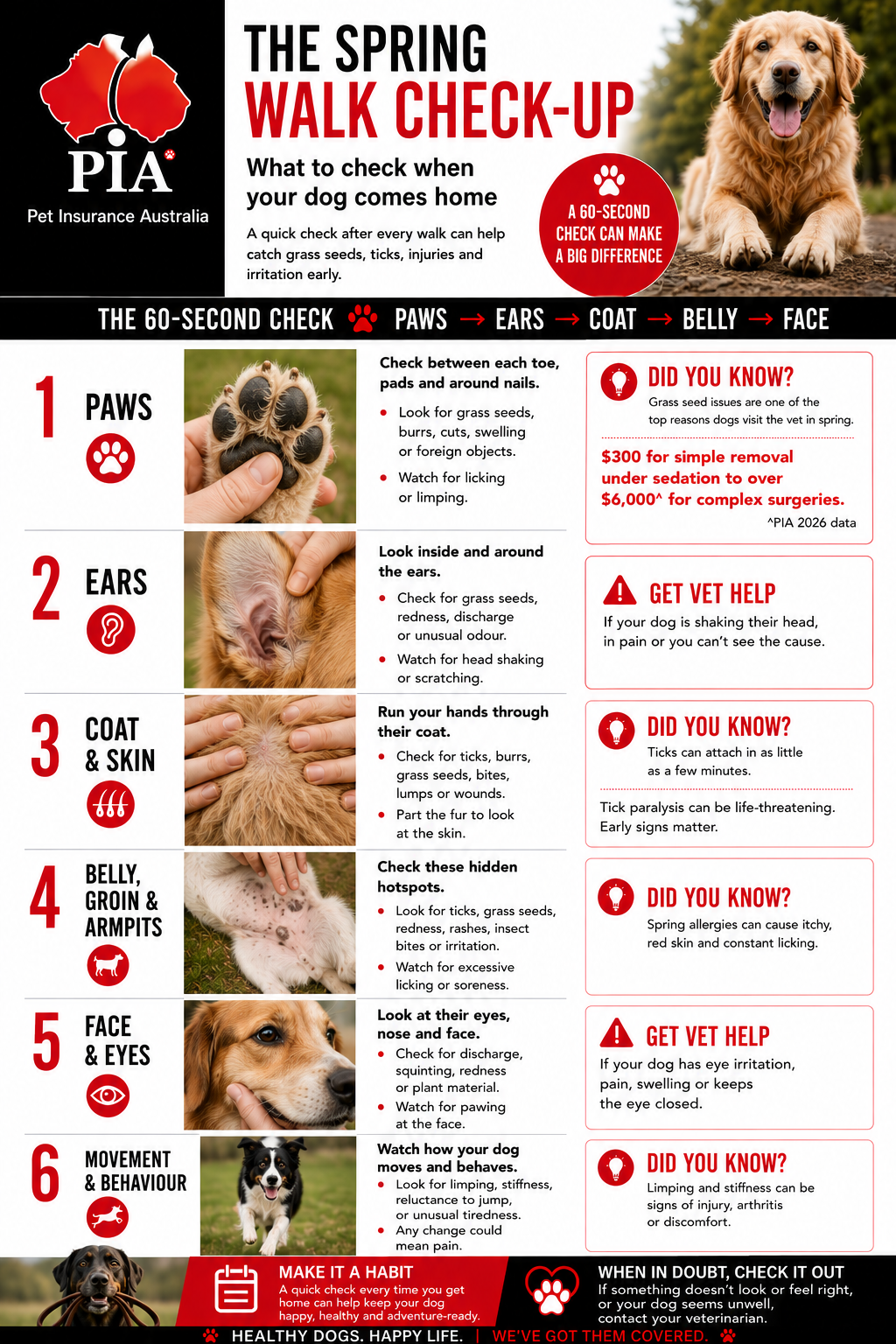
The 60-Second Spring Walk Routine
Before you put the lead away, make this your new spring habit:
PAWS → EARS → COAT → BELLY → FACE
Then ask yourself one final question:
Is my dog behaving and moving normally?
It doesn’t need to become a lengthy examination after every walk. Once you’re used to doing it, a quick check can become as automatic as taking off the lead.
Frequently Asked Questions
Should I check my dog for ticks after every walk?
If you live in or visit a tick-prone area, regular physical checks are a useful additional precaution. They should not be considered a substitute for appropriate parasite prevention. Your veterinarian can advise you about the tick risks in your area and suitable prevention for your dog.
Where do grass seeds commonly get stuck in dogs?
Grass seeds can become caught in the coat and may enter areas including the paws, ears, nose, skin and other body openings. Dogs that spend time running through long or dry grass can be particularly exposed.
Why is my dog suddenly shaking their head after a walk?
Sudden head shaking can have several causes, including ear irritation or a foreign body such as a grass seed. If the shaking persists, particularly after your dog has been in long grass, veterinary examination is recommended.
Why does my dog lick their paws after walking on grass?
Occasional licking may simply mean something has irritated the paw, but persistent or recurrent licking can be associated with grass seeds, minor injuries, parasites, environmental allergies, infection or other sources of discomfort.
Should I wash my dog’s paws after a spring walk?
For some dogs, particularly those affected by environmental allergens, removing pollen and other material from the paws and coat after outdoor exposure may be helpful. Speak with your veterinarian about the best skin-care routine for an allergy-prone dog.
Which dogs are most at risk from grass seeds?
Any dog exposed to seeding grasses can encounter them, but dogs with long, curly, dense or feathered coats may collect plant material more readily. Dogs that run through long grass or scrub should be checked particularly carefully.
When should I take my dog to the vet after a walk?
Seek veterinary advice if your dog develops persistent limping, pain, swelling, repeated head shaking, significant skin irritation, eye pain, persistent sneezing, unusual behaviour or other concerning symptoms. Weakness, breathing changes, collapse or suspected tick paralysis require urgent veterinary attention.
*PetSure 2026 Health Monitor
^PIA Data 2025
This information is general in nature and is not a substitute for professional veterinary advice. If you are concerned about your dog’s health or behaviour, contact your veterinarian.

Nadia Crighton is a renowned and accomplished professional in the fields of Journalism, Public Relations, and Writing, with an extensive career spanning over 25 years, 20 of which have been dedicated to promoting the health and well-being of pets.
Get the latest Pet Insider Tips & News
Error: Contact form not found.
We offer award-winning* pet insurance policies to protect your furry friend’s health and wellbeing. Get a quote today and give your pets the care they deserve.

Archives
Categories
- Cat Care (67)
- Cats (3)
- Dog Care (137)
- Guides (29)
- Health and Nutrition (210)
- Lifestyle and Activities (223)
- Media Release (64)
- Pet Care (260)
- Rescue Dogs (1)

