

Dog Dementia: The Early Signs Every Pet Owner Should Know
This article was reviewed by Dr Betty Chan to help ensure pet owners receive accurate, up-to-date veterinary information.
As our dogs get older, it’s natural to expect a few changes. They may slow down on walks, sleep a little more, or take longer to get up after a nap. But what happens when your once-confident companion starts staring at walls, pacing at night, forgetting familiar routines, or seeming confused in their own home?
Many pet owners assume these changes are simply part of ageing. However, they may be signs of canine cognitive dysfunction (CCD), often referred to as dog dementia.
Like Alzheimer’s disease in humans, canine cognitive dysfunction is a progressive condition that affects memory, learning, awareness, and behaviour. While there is no cure, early recognition can help improve your dog’s quality of life and potentially slow the progression of symptoms.
Just How Common Is Dog Dementia?
Research suggests canine cognitive dysfunction is significantly more common than many pet owners realise.
A 2025 review found cognitive dysfunction affects approximately 14% to 35% of dogs over eight years of age, with prevalence increasing dramatically in senior dogs over 15 years old. Studies suggest as many as 70% of dogs over 15 years may be affected*.
One of the most frequently cited studies found that 28% of dogs aged 11–12 years showed signs of cognitive impairment, increasing to 68% of dogs aged 15–16 years>.
Perhaps even more concerning is that many cases may go undiagnosed. Researchers have suggested owners often mistake early symptoms for “normal ageing,” delaying veterinary assessment and support.
What Causes Dog Dementia?
While researchers are still learning more about the condition, canine cognitive dysfunction is associated with age-related changes in the brain, including the build-up of proteins, loss of neurons, inflammation, and reduced brain function.
Interestingly, many of the same biological changes seen in dogs with cognitive dysfunction are also observed in people living with Alzheimer’s disease.
“Canine cognitive dysfunction (CCD) is a progressive neurodegenerative condition in older dogs, similar to Alzheimer’s disease in humans,” Dr Betty Chan says. “It involves physical changes in the brain that affect memory, learning, and behaviour. This differs from normal ageing, which may involve slowing down or sensory decline, and may cause behavioral deterioration.”
Early Signs Of Dog Dementia
The challenge for pet owners is that symptoms often develop gradually.
You may notice only one or two changes at first.
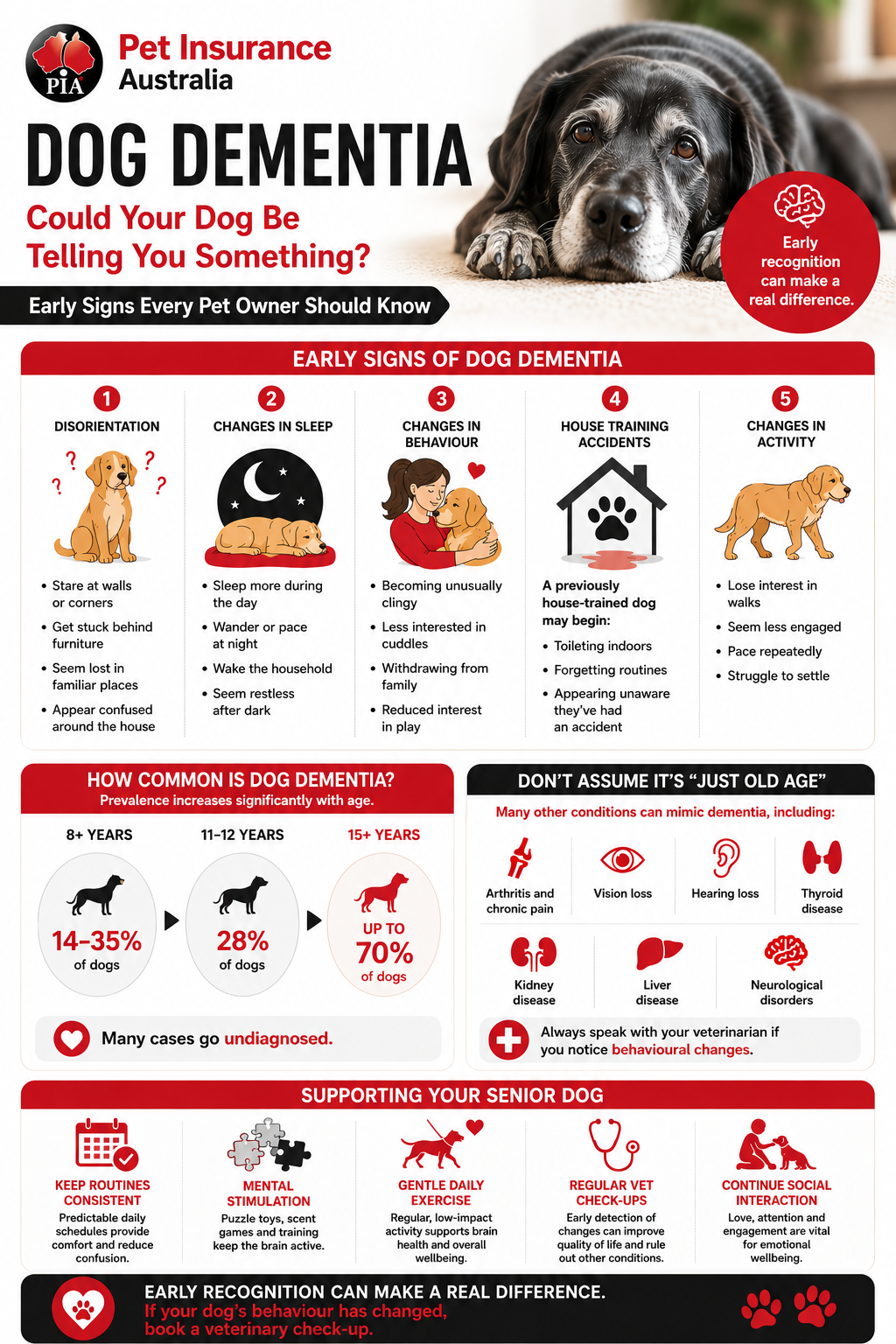
Disorientation
Dogs may:
- Get stuck behind furniture
- Seem lost in familiar environments
- Stare at walls or into corners
- Appear confused when entering a room
Changes In Sleep Patterns
One of the most common early signs is disruption to the sleep-wake cycle.
Dogs may sleep more during the day but become restless overnight, pacing, wandering, whining, or waking family members.
Research has shown dogs with more advanced cognitive dysfunction experience greater sleep disturbances and reduced restorative sleep.
“Early signs are often subtle and include mild disorientation, changes in sleep patterns (especially more wakefulness at night), reduced interaction or unusual clinginess, decreased interest in activities, and occasional house accidents,” Dr Chan says. “Monitoring can begin from as young as 7 years of age, and the odds of a CCD diagnosis increase by 52% with each additional year of age. Therefore, pet owner needs to monitor for CCD symptoms from 7-8 years of age.”
Dr Chan also advises that this is often due to disruption of the circadian rhythm and brain changes affecting sleep regulation. Dogs may become more anxious or disoriented at night, a phenomenon sometimes referred to as ‘sundowning’.
Changes In Social Interaction
Some dogs become clingier and seek more reassurance.
Others may become withdrawn and less interested in family interaction, play, or affection.
House Training Accidents
A previously house-trained dog may begin having accidents indoors, not because they have forgotten their training, but because cognitive changes can affect memory and awareness.
“Dogs may lose previously learned behaviors, including house training, leading to accidents indoors despite prior reliability.”
Changes In Activity Levels
Some dogs appear less interested in activities they once loved.
Others may pace repetitively or seem unable to settle.
A large study from the Dog Aging Project found physically inactive dogs were significantly more likely to experience cognitive dysfunction than highly active dogs.
“Veterinary advice should be sought if there are persistent behavioural changes, sleep disturbances, house training regression, or signs of confusion or disorientation,” Dr Chan says. “CCD can affect any breed. Age is the biggest risk factor, although smaller breeds, terriers, toy breeds, and non-sporting dogs may have a slightly higher reported prevalence.”
Is It Just Old Age Or Something More?
This is one of the biggest questions pet owners ask.
While ageing itself can bring changes in energy levels and mobility, confusion, disorientation, altered sleep patterns, and significant behavioural changes should never be automatically dismissed as “just old age.”
Many other medical conditions can mimic dementia symptoms, including:
- Arthritis and chronic pain
- Vision loss
- Hearing loss
- Thyroid disease
- Neurological disorders
- Kidney disease
- Liver disease
“Conditions to rule out include pain (e.g. arthritis), sensory decline (vision or hearing), kidney disease, endocrine disorders, and neurological conditions such as brain tumours or seizures,” Dr Chan says.
A veterinary assessment is essential to identify the underlying cause.
“Signs suggestive of CCD include getting lost in familiar environments, forgetting trained behaviors, changes in social interaction, reversed sleep cycles, and repetitive behaviors like pacing,” she says. “These changes typically progress over time.
The Risk Increases With Age
Age remains the strongest known risk factor.
Researchers from the Dog Aging Project^ found the odds of canine cognitive dysfunction increased by approximately 52% with each additional year of age when accounting for other health and lifestyle factors.
The study also found that dogs with lower activity levels were significantly more likely to experience cognitive decline.
Can Dog Dementia Be Treated?
There is currently no cure for canine cognitive dysfunction, but early intervention can make a meaningful difference.
Treatment plans may include:
- Specialised senior diets
- Nutritional supplements
- Environmental enrichment
- Consistent daily routines
- Cognitive games and mental stimulation
- Medications prescribed by your veterinarian
Many dogs continue to enjoy a good quality of life for years following diagnosis when symptoms are recognised and managed early.
“Cognitive decline is not just a normal part of ageing. Early recognition and intervention can significantly improve a dog’s quality of life,” Dr Chan advises. “
CCD is diagnosed based on history of behavioral changes, clinical examination, and exclusion of other medical conditions. There is no single definitive diagnostic test.
“While there is no cure, management strategies include medications, specialised diets rich in antioxidants, supplements, consistent routines, and reducing stress. Early intervention can improve quality of life.”
How To Support An Older Dog At Home
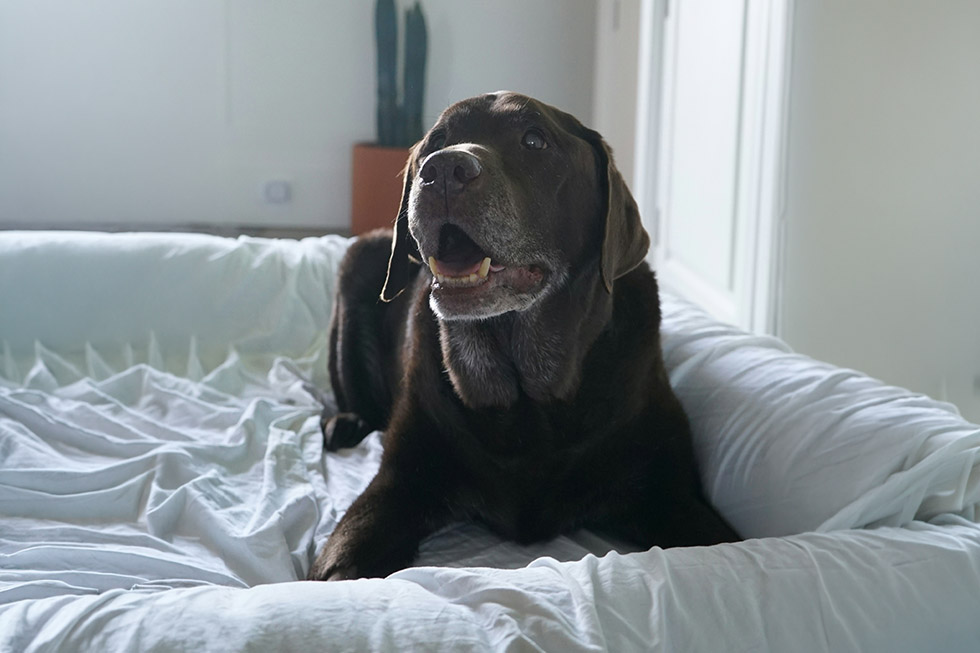
If your dog is entering their senior years, there are several ways you can support their brain health:
- Keep daily routines predictable
- Continue gentle exercise
- Introduce scent games and puzzle toys
- Schedule regular veterinary check-ups
- Monitor behavioural changes
- Maintain social interaction and engagement
Research has consistently shown physical activity is associated with better cognitive outcomes in ageing dogs*.
“Recommended activities for older dogs include puzzle toys, scent games, gentle training exercises, short walks, and maintaining a predictable daily routine to provide mental stimulation without causing stress.”
What Pet Owners Need to Know
Watching a beloved dog grow older can be emotional. While some slowing down is expected, confusion, pacing, sleep disturbances, and behavioural changes may indicate something more than normal ageing.
The good news is that recognising the signs early and seeking veterinary advice can help dogs remain comfortable, engaged, and happy for as long as possible.
If you’ve noticed changes in your senior dog’s behaviour, don’t assume it’s simply old age. A conversation with your veterinarian could make all the difference.
FAQ
Can dogs get dementia?
Yes. Canine Cognitive Dysfunction (CCD), often called dog dementia, is a recognised age-related condition that affects memory, awareness, learning, and behaviour.
What age do dogs get dementia?
Signs most commonly appear in dogs over eight years of age, with risk increasing significantly in dogs aged 11 years and older.
What are the first signs of dog dementia?
Early signs include confusion, staring at walls, changes in sleep patterns, pacing, house-training accidents, and altered social behaviour.
Can dog dementia be treated?
While there is no cure, veterinary treatment, dietary support, mental stimulation, and environmental management can help improve quality of life.
Is dog dementia painful?
The condition itself is not believed to be painful, but the confusion and anxiety it can cause may be distressing for affected dogs.
Sources:
*https://pmc.ncbi.nlm.nih.gov/articles/PMC12520861/
^https://www.nature.com/articles/s41598-022-15837-9

Nadia Crighton is a renowned and accomplished professional in the fields of Journalism, Public Relations, and Writing, with an extensive career spanning over 25 years, 20 of which have been dedicated to promoting the health and well-being of pets.
Get the latest Pet Insider Tips & News
Error: Contact form not found.
We offer award-winning* pet insurance policies to protect your furry friend’s health and wellbeing. Get a quote today and give your pets the care they deserve.

Archives
Categories
- Cat Care (67)
- Cats (3)
- Dog Care (137)
- Guides (29)
- Health and Nutrition (210)
- Lifestyle and Activities (223)
- Media Release (64)
- Pet Care (260)
- Rescue Dogs (1)

