
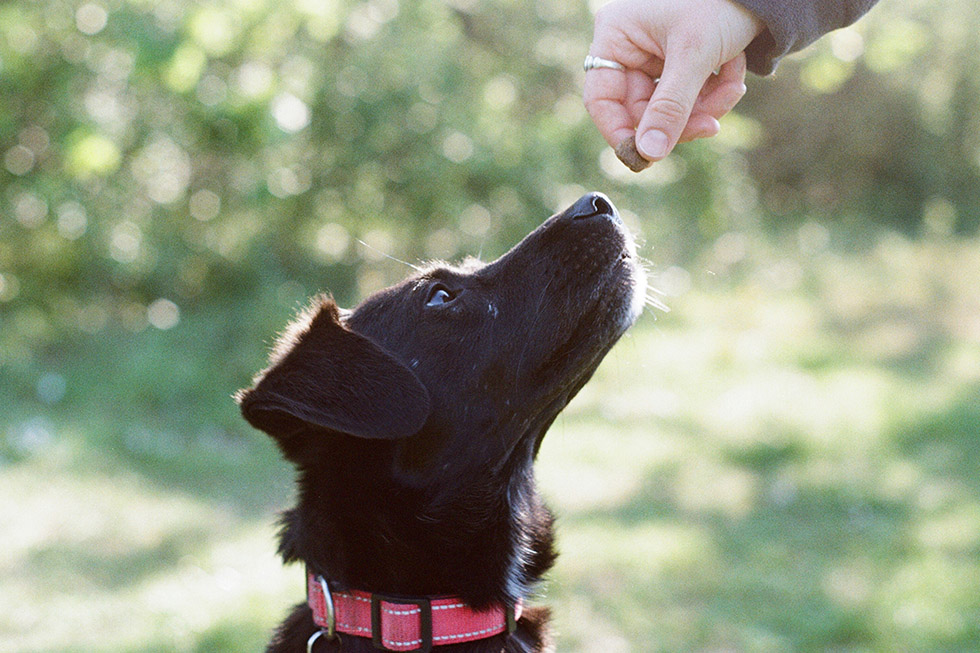
Dog Training Tips: An Expert Guide to Harnesses, Collars, Leads and Better Behaviour
Featuring expert insights from Gareth Bingon, Director of EzyDog.
Training a dog isn’t simply about teaching them to sit, stay or walk politely on a lead. It’s about building trust, creating consistent expectations and understanding how the right equipment can support safer, more enjoyable experiences. Training is a beautiful language that you create alongside your trusty companion. It allows you to communicate and understand each other.
From puppies learning their first commands to adult dogs struggling with pulling or reactivity, Australian owners face plenty of training challenges.
Pet Insurance Australia caught up with Gareth Bingon, Director of EzyDog, to chat about training aids and the biggest mistakes owners make…and, surprisingly, it has nothing to do with the dog or the equipment they use.
30-Second Answer: What Makes Dog Training Successful?
Consistency, positive reinforcement and appropriately fitted equipment are the foundations of effective dog training. Start in quiet environments, gradually introduce distractions and reward desirable behaviour. A suitable harness, fixed-length lead, and long training line can support safe learning, but equipment alone can’t fix behavioural problems.
Why Is Consistency So Important in Dog Training?
One of the most common mistakes owners make is expecting dogs to understand rules that change depending on who’s holding the lead.
“Inconsistency, without a doubt. One person in the house lets the dog jump up, another tells it off, and the dog spends its life guessing,” Bingon explains.
He also warns against practising commands exclusively in familiar environments.
“The second mistake is only training where it is easy. A dog that sits beautifully in the kitchen has not learnt to sit at the off-leash beach with three kelpies tearing past.”
His advice is to begin training somewhere quiet before gradually introducing new environments, people, dogs and distractions.
While dog-equipment can make training safer and easier, it cannot replace consistency.
“Gear is the tool. Consistency is the trade.”
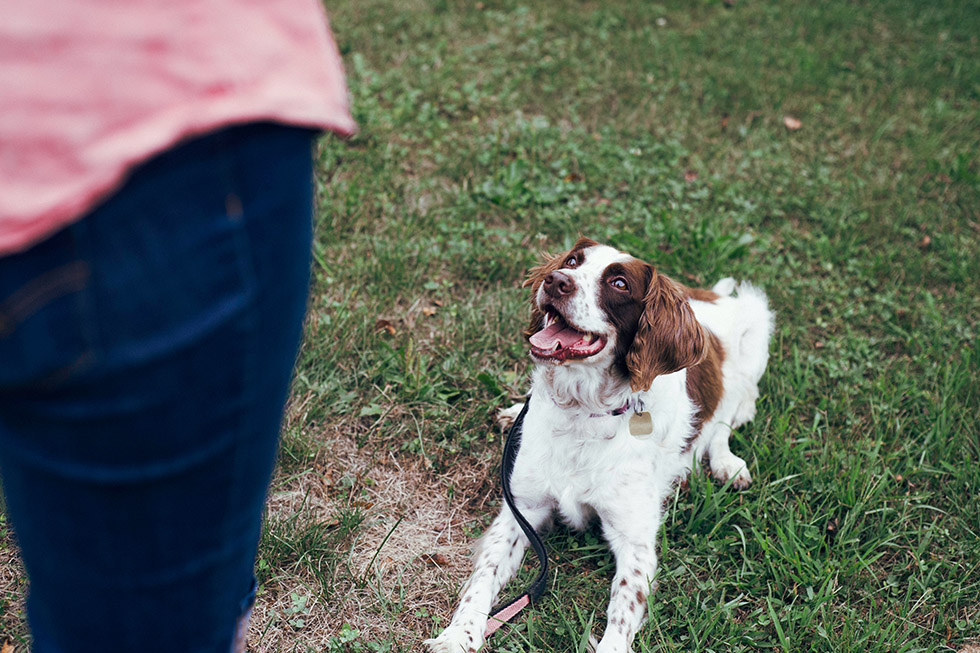
What Dog Training Equipment Do Owners Actually Need?
With countless harnesses, collars, leads and training accessories available, it’s easy to assume more equipment means better results.
Bingon disagrees.
“If the drawer is full and the dog still pulls, the drawer is not the problem.”
For puppy owners, he recommends starting with a few essentials:
- Fixed-length lead: Approximately 1.8 metres for everyday walking and establishing consistent boundaries.
- Long training line: Useful for practising recall at a safe distance before progressing to off-leash environments.
- Treat pouch: Keeps rewards readily available so desirable behaviour can be reinforced promptly.
- Well-fitted collar or harness: Selected according to the dog’s size, needs and training approach.
Quality, fit and durability matter more than the number of accessories an owner purchases.
Harness vs Collar: Which Is Better for Dog Training?
Both collars and harnesses have a place in dog ownership, but understanding their different purposes can help prevent discomfort and improve control.
When should a dog wear a harness?
Harnesses distribute walking pressure across the dog’s body rather than concentrating it around the neck.
They can be particularly useful for dogs that pull, smaller breeds, flat-faced dogs such as Pugs and French Bulldogs, and dogs with existing neck concerns.
“Because a harness takes the conversation off the dog’s throat,” he explains. “Once you understand what repeated pressure can do to a trachea, especially on small breeds and flat-faced dogs, you stop thinking of a collar as the default walking attachment.”
Bingon explains that a well-fitted harness distributes pressure across the dog’s chest and shoulders rather than concentrating it on the neck. This not only provides greater comfort and control but also allows owners to better understand their dog’s behaviour without the added stress of pressure on the throat.
However, choosing the right harness is essential, as different designs serve different purposes, from everyday walking to managing pulling and supporting specific training needs.
Front-clip vs back-clip harnesses
A back-clip harness attaches the lead above the dog’s back and is commonly used for everyday walking.
A front-clip harness attaches at the chest, helping redirect a dog towards its handler when it pulls.
For dogs that persistently pull, a front attachment may provide greater control while owners work on loose-lead walking.
Importantly, the harness must fit correctly.
“A badly fitted harness that lets the dog lean its whole chest into the strap is effectively a sled-pulling rig, and the dog will happily oblige.”
How should a dog harness fit?
A correctly fitted harness should:
- Allow approximately two fingers to sit flat beneath the straps.
- Sit comfortably across the breastbone without riding into the throat.
- Avoid rubbing behind the front legs.
- Remain secure without rotating or sliding.
- Allow comfortable movement without the dog easily backing out.
Owners should check the fit while their dog is standing and moving, particularly as puppies grow or adult dogs change shape.
Are dog collars still necessary?
Absolutely. Collars remain useful for carrying identification and registration tags, and some dogs that walk calmly on a lead can comfortably wear a flat collar.
Martingale collars can also provide additional security for breeds such as Greyhounds and Whippets, whose head and neck proportions make slipping out of traditional collars easier.
However, collars should not be used to apply force to a dog that pulls heavily.
Bingon offers a useful distinction:
“Collar on for ID, harness on for load. That split keeps everyone honest.”
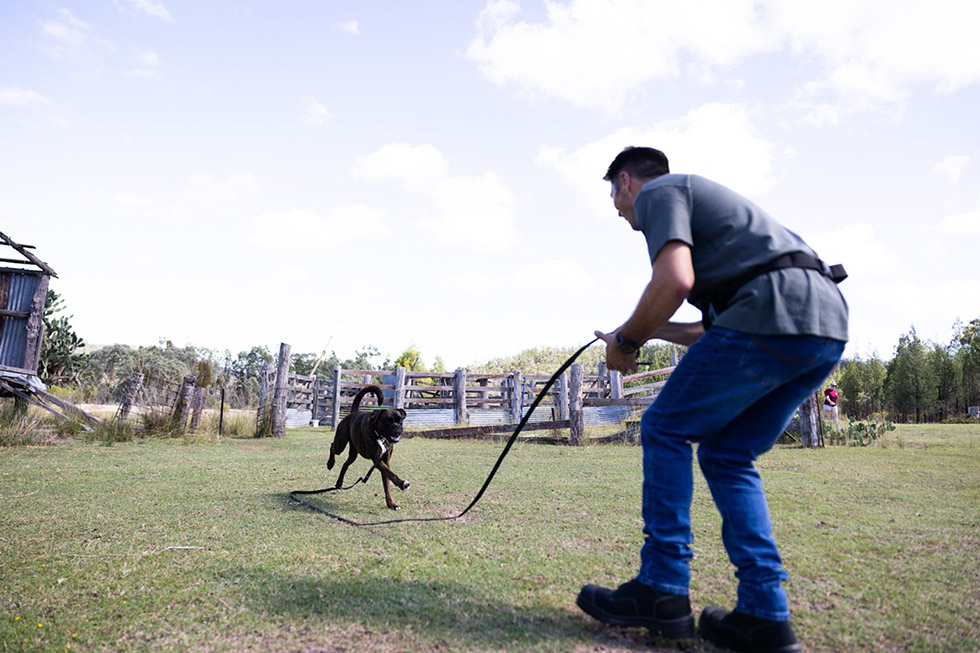
How Long Should a Dog Training Lead Be?
Different training activities require different lead lengths.
| Lead length | Recommended use |
| 1.2–1.8 metres | Everyday walks and loose-lead training |
| 3–5 metres | Early recall training and exploratory walks |
| 5–10 metres | Recall practice at greater distances in suitable open spaces |
Long training lines give dogs greater freedom while allowing owners to maintain control.
“Because recall has to be practised at distance, and a long line lets you do that without ever letting the dog learn that ‘come’ is optional.”
One of the most important commands dog owners can teach is recall (“come”), yet its value is often underestimated. A reliable recall can be lifesaving, particularly when unexpected situations arise. Whether it’s an out-of-control dog approaching at the park, a sudden distraction during a walk, or an accidentally open front door with another dog or tempting ball in sight, knowing your dog will return when called can make all the difference to their safety.
Bingon cautions against using long lines near traffic and isn’t an advocate of retractable leads for training.
Retractable leads maintain tension and can inadvertently teach dogs that pulling results in greater freedom.
“A retractable keeps the lead slightly tight, and pulling against it is rewarded with more distance, which is the opposite of what you are trying to teach,” Bingon warns. “The thin cord also makes them a poor choice around other dogs and traffic. If you want your dog to have freedom on a walk, a long line gives you that distance without the mixed messages, and it is why we designed the Vario 4 to convert between lengths. With my own two dogs, Scotch and Soda, I use either a static lead between 1.2 and 1.8 metres or the 1.2 metre Zero Shock.”
Does Clicker Training Really Work?
Clicker training is a positive reinforcement technique that uses a distinctive sound to mark the exact moment a dog performs a desired behaviour.
The click is followed by a reward, helping the dog understand precisely what it did correctly.
“The clicker solves a timing problem,” Bingon explains.
For beginners, the process is straightforward. Start by clicking and immediately offering a treat until the dog associates the sound with a reward.
Once that association is established, use the click to mark behaviours such as sitting, responding to a recall command or walking calmly.
Keep sessions short, positive and enjoyable. The best news is that once you have established the click with a clicker, you can replace this with a word or sound you make, allowing you to free up your hands on a walk.
Can Training Equipment Stop Pulling, Lunging or Reactivity?
One of the most important distinctions for dog owners is understanding the difference between managing behaviour and changing it.
“Equipment manages behaviour, training changes it,” Bingon says.
A suitable harness may provide better control over a dog that pulls or lunges, but it doesn’t necessarily address the underlying reason for that behaviour.
Fear, aggression, resource guarding and separation anxiety require more than a different lead or harness.
For these challenges, owners should seek guidance from a qualified trainer or veterinary behaviourist.
Sudden behavioural changes also warrant veterinary attention, particularly if a normally friendly dog begins snapping, resisting walks or displaying unusual aggression.
Pain or illness may be contributing to the change.
What If Your Dog Hates Wearing a Harness?
A dog that avoids its harness isn’t necessarily being stubborn. The equipment may be uncomfortable, poorly fitted or associated with an unpleasant experience.
Bingon recommends introducing harnesses gradually through positive experiences.
Start by allowing the dog to investigate the harness, rewarding calm behaviour and gradually progressing towards putting it on.
Avoid forcing the process or rushing to fasten the straps.
With patience, positive reinforcement and suitable equipment, many dogs can become more comfortable wearing a harness.
How Long Does Dog Training Take to Work?
There is no universal timeline for successful dog training.
Some owners may notice improvements in simple behaviours within a few weeks of short, consistent daily sessions. More established habits and complex behavioural concerns can take considerably longer and may need professional assistance in a one-on-one setting or a group setting.
The dog’s age, previous experiences, environment and the owner’s consistency all influence progress.
Bingon also reminds owners that equipment should be checked regularly.
“By condition, not by calendar, though I would not discourage people from rotating their equipment every one to two years,” he advises.
“Inspect properly once a month and after any big event: a beach holiday, a scrap with a fence, a teething puppy discovering the lead. Replace anything with frayed webbing, cracked buckles, corroded hardware or stitching pulling loose, and replace it before the walk where it fails, not after.”
Bingon also reminds owners that even a lead that looks perfectly fine at first glance may be unsafe if it has been chewed or damaged. While quality training equipment can last for years with proper care, worn, neglected or chewed gear can quickly become a safety risk. Regular inspections and timely replacements are essential to keeping dogs secure on every walk.
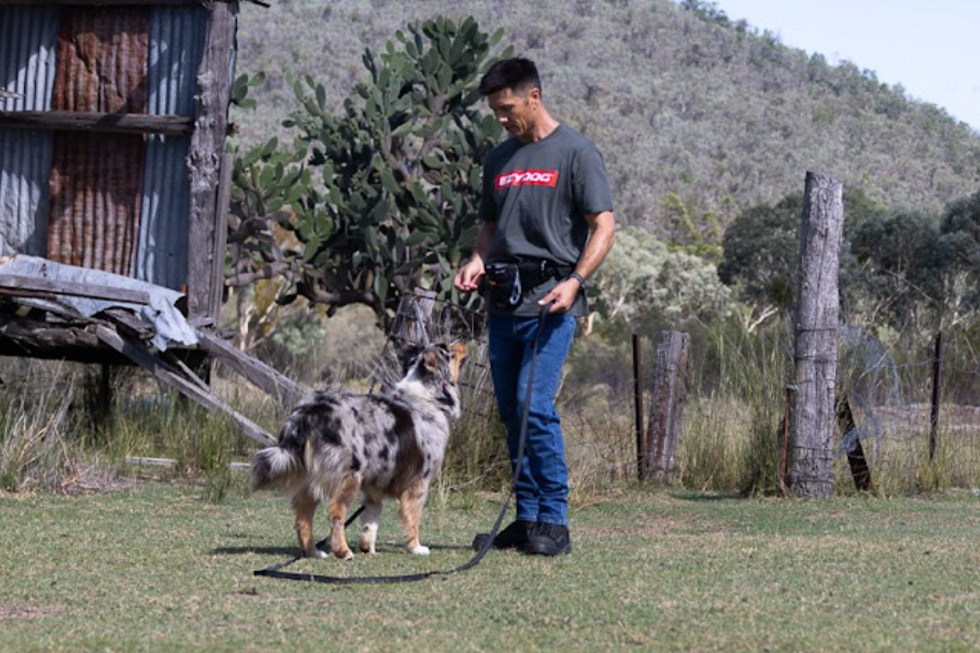
Frequently Asked Questions About Dog Training
What is the best age to start training a puppy?
Puppies can begin learning simple behaviours and household routines from the time they arrive home. Keep training sessions short, positive and appropriate for their age and development.
Is a harness better than a collar for a dog that pulls?
A properly fitted harness, particularly one with a front attachment point, may help owners manage pulling more comfortably. However, loose-lead training is still necessary to change the behaviour.
Can you train an older dog?
Yes. Adult and senior dogs can learn new behaviours through consistent, reward-based training. Established habits may require additional time and patience.
Should dogs wear harnesses all day?
Harnesses are generally best used for activities where they’re needed, such as walking or supervised training. Remove them when appropriate to reduce the risk of rubbing, snagging or discomfort.
How often should dog owners practise training?
Short, regular sessions are generally more effective than occasional lengthy sessions. Reinforcing desirable behaviour during everyday activities also helps dogs understand what’s expected.
Building Better Behaviour Starts With Everyday Habits
For owners hoping to improve their dog’s behaviour, Bingon’s final piece of advice is refreshingly simple.
“Reward the behaviour you want instead of waiting to correct the one you do not.”
Rather than focusing exclusively on unwanted behaviours, he encourages owners to recognise and reward the things their dogs are doing well.
“Training is not a six-week course you graduate from. It is just how you live with a dog, and it is more fun for both of you than the alternative.”
About the expert: Gareth Bingon is the Director of EzyDog, an Australian-founded dog accessories brand specialising in harnesses, collars, leads and training equipment.

Nadia Crighton is a renowned and accomplished professional in the fields of Journalism, Public Relations, and Writing, with an extensive career spanning over 25 years, 20 of which have been dedicated to promoting the health and well-being of pets.
Get the latest Pet Insider Tips & News
Error: Contact form not found.
We offer award-winning* pet insurance policies to protect your furry friend’s health and wellbeing. Get a quote today and give your pets the care they deserve.

Archives
Categories
- Cat Care (68)
- Cats (3)
- Dog Care (138)
- Guides (30)
- Health and Nutrition (210)
- Lifestyle and Activities (223)
- Media Release (67)
- Pet Care (260)
- Rescue Dogs (1)

