
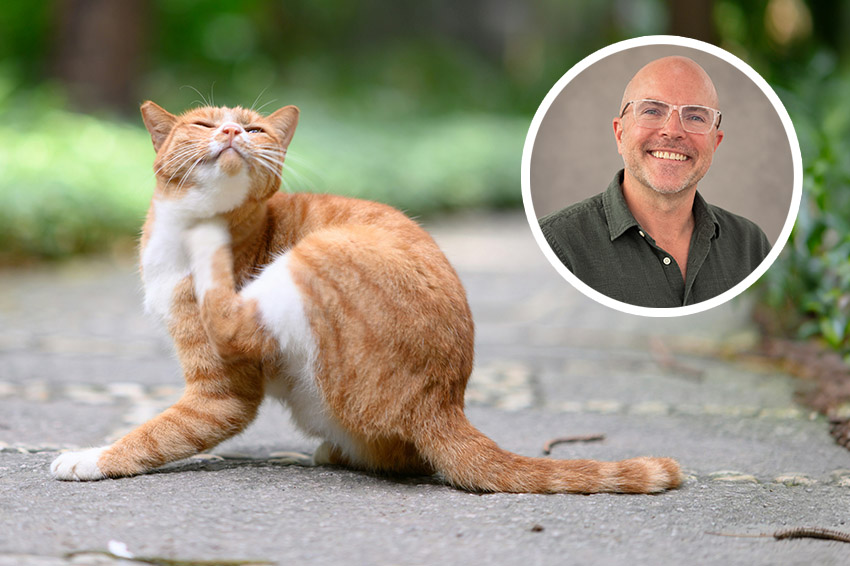
Cat Allergies: Why Is My Cat Itchy, Licking or Losing Hair?
Dr Richard Gowan, Senior Veterinarian and Clinic Director at The Cat Doctors, reviewed this article to help ensure pet owners receive accurate, up-to-date veterinary information.
Cats are famous for keeping themselves meticulously clean, so seeing your cat licking, grooming, or scratching may not immediately set off alarm bells. But when grooming becomes constant, bald patches appear, or their skin looks red and irritated, it could signal that something isn’t quite right.
Allergies can be particularly tricky to recognise in cats because the signs aren’t always obvious, and what looks like ordinary grooming or even a behavioural issue may actually be a response to persistent itchiness.
Pet Insurance Australia caught up with Dr Richard Gowan, Senior Veterinarian and Clinic Director at The Cat Doctors, about what cat allergies can look like, the common triggers behind itchy skin and when it’s time to get your vet involved.
30-Second Answer
Is your cat licking, scratching or losing hair? If grooming causes bald patches, broken hairs, redness, scabs, or skin lesions, don’t dismiss it as normal grooming.
Fleas are a particularly common culprit, and you don’t need to see fleas for them to be responsible. Other possible triggers include environmental allergens, food and skin conditions that can produce very similar symptoms.
Because no single test diagnoses allergies in cats, a veterinarian should investigate recurring or persistent symptoms to identify the underlying cause.
Can Cats Get Seasonal Allergies?
Yes. Cats can develop allergies to many of the same environmental allergens that affect people, including grass and tree pollens, mould spores and dust mites.
However, feline allergies don’t necessarily follow a predictable spring pattern.
Dr Richard Gowan, Senior Veterinarian and Clinic Director at The Cat Doctor, explains that cats may have one primary trigger or several contributing allergens. Dust mites and dietary allergens, for example, can cause year-round exposure, while pollen and flea exposure may increase seasonally.
Symptoms can therefore persist year-round but worsen when a cat’s overall allergen exposure increases.
Weather can also influence when environmental allergens become problematic, so symptom severity and timing can vary from year to year.
Fleas Can Be a Major Cause of Itchy Skin in Cats
Warmer weather can also mean more fleas, and for a cat with flea allergy dermatitis (FAD), it doesn’t take a major infestation to cause problems.
“Some cats can be enormously sensitive to the flea bite and associated saliva,” Dr Gowan warns. “This can trigger intense allergic sensitivities that can persist for days to weeks. A highly sensitive cat can develop significant itching and inflammation following only a couple of flea bites.”
Importantly, not seeing fleas doesn’t rule them out.
Cats are exceptionally efficient groomers and may lick or bite fleas from their coats before an owner, or even a veterinarian, can see. Flea dirt, which is essentially dried blood passed by fleas, may sometimes be visible around the base of the coat.
Indoor cats shouldn’t automatically be considered safe from flea exposure either.
For susceptible cats, consistent year-round flea prevention can be important. Every suitable pet in the household may also need appropriate protection to help break the flea life cycle within the home.
Your veterinarian can recommend a flea preventative appropriate for your individual cat.
What Does an Itchy Cat Look Like?
One of the biggest challenges with feline allergies is recognising the itch. Dogs may obviously scratch. Cats are naturally meticulous groomers, making excessive licking much easier to overlook.
“Often the first thing an owner notices is that the coat is becoming slightly bald, particularly over the belly, inner thighs or hind legs.”
Repeated licking with a cat’s rough, spiny tongue can also break the hair shafts rather than creating completely bald skin.
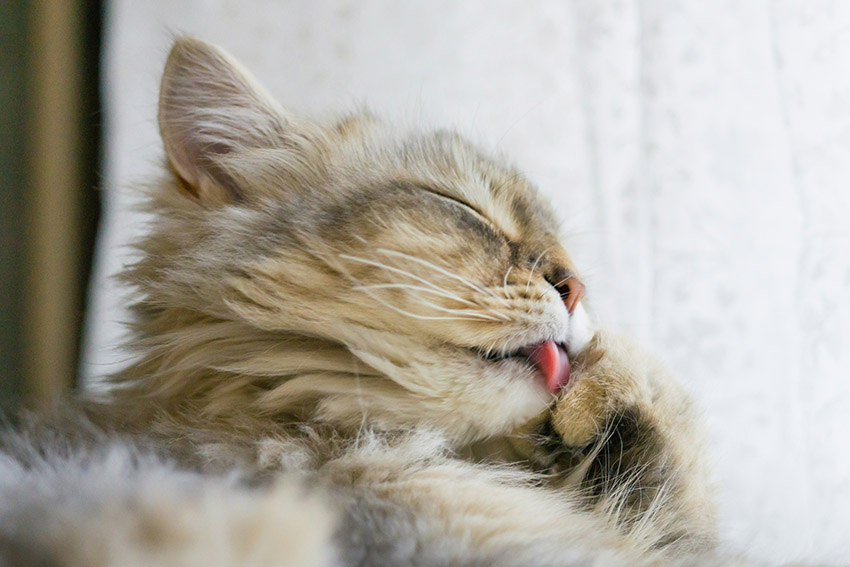
Signs your cat may be itchy include:
- Increased licking or grooming
- Thinning fur or bald patches
- Broken hairs
- Excessive licking of the belly, inner thighs or hind legs
- Scratching or rubbing around the head and neck
- Red or irritated skin
- Small scabs or crusts
- Increased ear discharge
- Restlessness or agitation
As Dr Gowan explains:
“A useful rule is that if grooming is causing visible hair loss, broken hairs, redness or skin lesions, it shouldn’t be considered normal grooming.”
When Should You Take an Itchy Cat to the Vet?
If overgrooming or scratching causes visible hair loss, redness, sores, scabs, or ear problems, it’s time to have your cat examined. Recurring problems also warrant investigation rather than repeatedly waiting for them to settle.
Veterinary attention should be sought sooner if you notice:
- Moist or weeping skin wounds
- Open sores
- Significant crusting
- Repeated scratching or trauma around the face and neck
- Signs of pain
- Severe or persistent ear problems
- A cat that appears distressed, agitated or unable to settle because of the itch
Moist wounds can indicate a secondary infection, which may also be painful.
How Do Vets Diagnose Allergies in Cats?
Unfortunately, no single test can tell a veterinarian exactly what a cat is allergic to.
“Cat dermatology can all look the same; there is not one test that says allergy.”
Diagnosis is therefore usually a process of systematically investigating and excluding other possible causes.
A veterinarian may consider the location and appearance of the skin lesions alongside the cat’s diet, lifestyle, parasite prevention, previous medical history and other animals living in the household.
Infectious and parasitic conditions, including ringworm, also need to be considered.
Could it be a food allergy?
If a food allergy is suspected, a veterinarian may recommend a properly controlled elimination diet using an appropriate novel or hydrolysed protein diet.
This isn’t simply a matter of switching cat-food brands for a week or two. A diagnostic food trial can require months of diligent management and may be followed by a dietary challenge where appropriate.
While blood tests marketed for food allergies are available, Dr Gowan says their validity and usefulness are questionable.
Could it be an environmental allergy?
Environmental allergy in cats is often called feline atopic skin syndrome.
Veterinarians generally diagnose it after investigating and excluding other likely causes of the cat’s symptoms.
Allergy testing may sometimes be useful when a veterinarian is planning allergen-specific immunotherapy, but it is not a stand-alone test that proves a cat has an environmental allergy.
How Are Cat Allergies Treated?
Treatment depends on what’s causing the reaction and how severely the cat is affected.
Management may involve:
- Comprehensive parasite control
- Treating secondary skin infections
- Dietary changes or an elimination diet
- Medication to reduce itching and inflammation
- Reducing exposure to contributing allergens where possible
- Longer-term management for cats with chronic environmental allergies
- Allergen-specific immunotherapy in selected cases
Some cats experience recurring allergy problems throughout their lives, so good long-term management is more effective than treating individual flare-ups as they occur.
Is My Cat Overgrooming Because of Stress or Allergies?
It could be either…and sometimes both.
One of the most important misconceptions Dr Gowan encounters is the assumption that excessive grooming is simply behavioural.
“Stress, anxiety and behavioural factors can certainly exacerbate fastidious grooming behaviour, but itchiness and underlying skin disease need to be excluded before assuming that overgrooming is purely behavioural.”
There can also be an overlap between allergic skin disease and anxiety, which can make some cases more challenging to manage.
The same caution applies to fleas. Not finding one crawling through your cat’s coat doesn’t mean you can automatically cross flea allergy off the list.
“So if a cat is persistently licking, scratching or losing hair, it’s worth thinking of that behaviour as a potential sign of discomfort rather than simply a grooming habit. Finding and managing the underlying cause is much more effective than treating each flare-up in isolation.”
Cat Allergy FAQs
What are cats commonly allergic to?
Common triggers can include fleas, grass and tree pollens, mould spores, dust mites and certain foods. Some cats have one primary trigger, while others react to several.
Can indoor cats get flea allergy dermatitis?
Yes. Indoor living doesn’t completely eliminate the possibility of flea exposure. Cats are also very effective at grooming fleas from their coats, meaning owners may never actually see one.
Can one flea bite cause an allergic reaction in a cat?
A highly flea-allergic cat can develop significant itching and inflammation following only minimal exposure. Reactions can persist for days or weeks.
Why is my cat licking its belly bald?
Persistent licking of the belly, inner thighs and hind legs can be a sign of itchiness. Allergies, parasites, skin disease, and behavioural factors are among the possible causes, so a veterinarian should investigate visible or recurring hair loss.
How do I know if my cat is grooming too much?
If grooming results in thinning fur, bald patches, broken hairs, redness, scabs, or other skin lesions, it should no longer be considered normal grooming.
Can stress cause cats to overgroom?
Yes, stress and anxiety can contribute to excessive grooming. However, investigate underlying itchiness and skin disease before assuming overgrooming is purely behavioural.
Is there an allergy test for cats?
There is no single test that diagnoses all feline allergies. Diagnosis typically involves investigating and excluding other causes. Allergy testing can help in selected cases, particularly when planning allergen-specific immunotherapy.

Expert contributor:
Dr Richard Gowan
Senior Veterinarian, Clinic Director
BVSc (Hons), Feline Medicine (MACVSc)
The Cat Doctor
http://catdoctor.com.au
This article provides general information only and is not a substitute for veterinary advice. If your cat is experiencing persistent itching, hair loss, skin lesions or other concerning symptoms, speak with your veterinarian.

Nadia Crighton is a renowned and accomplished professional in the fields of Journalism, Public Relations, and Writing, with an extensive career spanning over 25 years, 20 of which have been dedicated to promoting the health and well-being of pets.
Get the latest Pet Insider Tips & News
Error: Contact form not found.
We offer award-winning* pet insurance policies to protect your furry friend’s health and wellbeing. Get a quote today and give your pets the care they deserve.

Archives
Categories
- Cat Care (68)
- Cats (3)
- Dog Care (137)
- Guides (29)
- Health and Nutrition (210)
- Lifestyle and Activities (223)
- Media Release (65)
- Pet Care (260)
- Rescue Dogs (1)

