
The Halloween Treat That Could Be More Frightening Than Chocolate for Your Dog
Australia — October 2026: Chocolate may be the Halloween treat most pet owners know to keep away from their dogs, but Pet Insurance Australia is warning of another potentially deadly ingredient hiding in lolly bags, handbags and kitchen cupboards this spooky season.
Xylitol, a sweetener commonly found in some sugar-free chewing gums, lollies, mints, baked goods and other products (even some types of the ultimate dog favourite — peanut butter), can cause a dangerous drop in a dog’s blood sugar and, at higher exposures, severe liver damage.
Unlike humans, dogs can experience a rapid release of insulin after consuming xylitol, causing their blood glucose to plummet.
“Most pet owners know chocolate and dogs don’t mix, but xylitol simply doesn’t have the same level of awareness,” says Nadia Crighton, Pet Insurance Australia spokesperson.
“Halloween is exactly the type of occasion where we can have bowls and bags of unfamiliar sweets scattered around the house. A dog doesn’t know the difference between a regular lolly and a sugar-free one, so checking the ingredients and keeping the entire Halloween haul out of reach is incredibly important.”
Xylitol may also be listed as birch sugar or E967 and can turn up in products pet owners may not immediately associate with poisoning, including some peanut butters, toothpastes, mouthwashes, vitamins, supplements and medications.
“Depending on the product, the dog’s size, and the amount consumed, even a relatively small exposure can be serious.”
Signs of xylitol poisoning can include:
- Vomiting
- Weakness or lethargy
- Wobbliness or loss of coordination
- Tremors
- Collapse
- Seizures
“If you know or suspect your dog has eaten something containing xylitol, don’t wait for symptoms to appear,” Crighton says. “Contact your veterinarian or an animal poisons service immediately and, if possible, keep the packaging so they know exactly what your dog may have consumed.”
Chocolate Still Deserves a Fright
Chocolate remains another major Halloween hazard. Chocolate contains theobromine and caffeine, which dogs metabolise differently to humans. The risk depends on the dog’s size and the type and amount of chocolate consumed, with cocoa powder, baking chocolate and darker chocolates generally containing substantially higher concentrations of the toxic compounds than milk chocolate.
Signs of chocolate toxicity can include vomiting, diarrhoea, restlessness, excessive thirst, increased heart rate and tremors, with severe cases potentially progressing to abnormal heart rhythms and seizures.
“Never assume that because your dog has only eaten a small amount of chocolate they’ll be fine,” Crighton says.
“A small dog getting into a block of dark chocolate is a very different situation to a large dog stealing a tiny piece of milk chocolate. Your vet can assess the risk based on the dog, the chocolate and the amount consumed.”
Beware the Halloween Haul
The danger doesn’t disappear once the sweets have been eaten. Foil, plastic and lolly wrappers can smell extremely tempting to dogs and may be swallowed along with remnants of food, potentially creating a gastrointestinal obstruction.
Grapes, raisins, sultanas and currants are another concern for dogs and can be hidden inside baked treats, while discarded food, skewers and other party leftovers can also present risks.
“The safest approach is to treat the entire Halloween lolly haul as off-limits to pets,” Crighton says. “Put it somewhere genuinely inaccessible. A closed bag sitting on the floor or a bowl pushed towards the back of the kitchen bench isn’t necessarily safe when you have a determined dog.”
When Dressing Up Becomes Scary
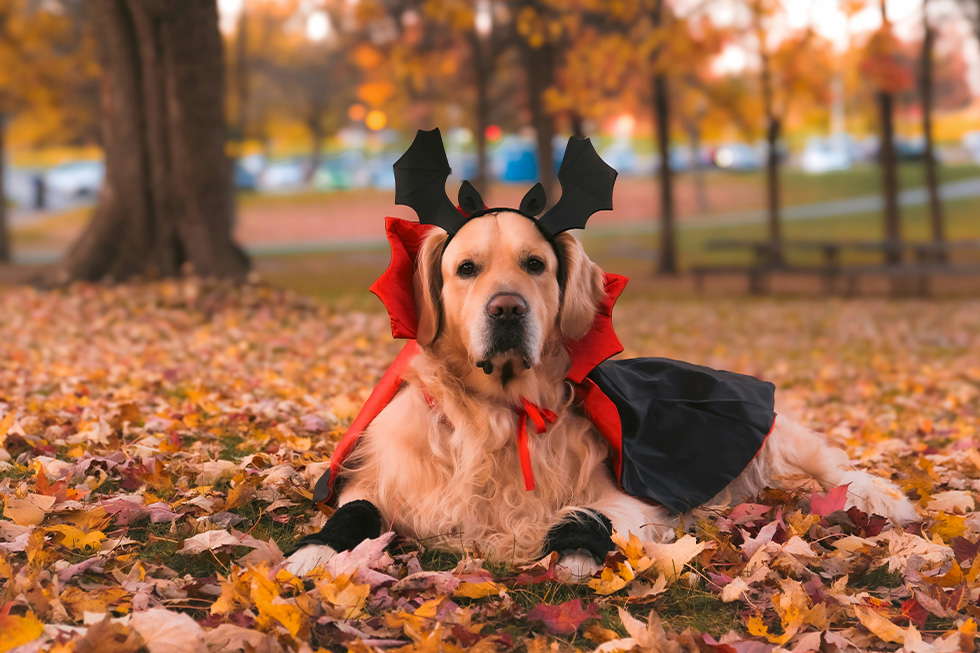
Halloween costumes can make for an adorable photo, but Pet Insurance Australia is also reminding owners that pets should never be left unsupervised while wearing a costume.
Costumes that are too tight can restrict movement or cause rubbing, while loose fabric and dangling decorations may become caught on furniture or chewed and swallowed. Costumes should never interfere with a pet’s vision, breathing, hearing or ability to move normally.
“If your pet freezes, repeatedly tries to remove the costume, hides or clearly looks uncomfortable, take it off,” Crighton says. “The photograph isn’t worth frightening or stressing your pet. If they are happy wearing something, keep it simple, make sure it fits correctly and supervise them the entire time.”
The Other Halloween Fright: The Front Door
For some pets, the biggest Halloween risk may simply be the constant knock at the door.
Costumed strangers, excited children, unfamiliar noises and repeated opening and closing of doors can be stressful and can also create an opportunity for pets to escape.
Pet Insurance Australia recommends keeping nervous pets in a quiet, secure area of the home with familiar bedding, water and somewhere to retreat. Owners should also ensure identification details and microchip information are current.
“Halloween should be fun, and a little preparation means our pets don’t need to pay the price for the festivities,” Crighton says. “Keep the sweets up high, read the labels, supervise costumes and give pets somewhere quiet to escape the commotion. And if your dog does raid the Halloween stash, particularly if xylitol or chocolate could be involved, contact a veterinary professional straight away.”
Sources / background information:
Merck Veterinary Manual — Xylitol Toxicosis in Dogs
https://www.merckvetmanual.com/toxicology/food-hazards/xylitol-toxicosis-in-dogs
Merck Veterinary Manual — Chocolate Toxicosis in Animals
https://www.merckvetmanual.com/toxicology/food-hazards/chocolate-toxicosis-in-animals
Animal Poisons Helpline — Xylitol
https://www.animalpoisons.com.au/news/xylitol-abcs-of-poisons/
Animal Poisons Helpline — Halloween Dangers
https://www.animalpoisons.com.au/news/halloween-dangers/

Nadia Crighton is a renowned and accomplished professional in the fields of Journalism, Public Relations, and Writing, with an extensive career spanning over 25 years, 20 of which have been dedicated to promoting the health and well-being of pets.
Get the latest Pet Insider Tips & News
Error: Contact form not found.
We offer award-winning* pet insurance policies to protect your furry friend’s health and wellbeing. Get a quote today and give your pets the care they deserve.

Archives
Categories
- Cat Care (67)
- Cats (3)
- Dog Care (136)
- Guides (29)
- Health and Nutrition (208)
- Lifestyle and Activities (222)
- Media Release (60)
- Pet Care (260)
- Rescue Dogs (1)

