

What Does Healthy Dog Poop Look Like? Colour, Consistency and When To Worry
Let’s be honest…checking your dog’s poop probably isn’t the highlight of your day.
But while it might not be glamorous, your dog’s poo can provide valuable clues about their overall health. In fact, changes in bowel movements are often one of the earliest signs that something may be wrong. From digestive upsets and dietary issues through to parasites and more serious medical conditions, what comes out the other end can tell you a lot about what’s happening inside your dog.
According to the PetSure Pet Health Monitor 2025, gastrointestinal conditions remain among the most common reasons Australian dogs require veterinary treatment, highlighting the importance of digestive health for our pets.
What Should Healthy Dog Poop Look Like?
While every dog is different, healthy dog poop generally shares a few key characteristics.
It should be:
✔ Chocolate brown in colour
✔ Firm but not hard
✔ Easy to pick up
✔ Log-shaped
✔ Consistent from day to day
Think of it as the Goldilocks rule, not too hard, not too soft.
A healthy stool should hold its shape without crumbling or leaving a messy residue behind.
If your dog’s poo regularly changes colour, consistency, or frequency, it may be worth paying closer attention. A trip to the vet can make all the difference in ensuring nothing more sinister is occurring to your dog.
Why Checking Your Dog’s Poop Matters
Most pet owners notice obvious symptoms such as vomiting, limping, or loss of appetite. However, digestive problems often show up in the backyard long before other symptoms appear.
Changes in stool can help identify:
- Dietary intolerances
- Sudden diet changes
- Gastrointestinal disease
- Intestinal parasites
- Bacterial infections
- Stress-related digestive issues
- Inflammatory bowel disease
- Foreign body ingestion
Many of these conditions respond better when identified early.
Dog Poop Colour Guide
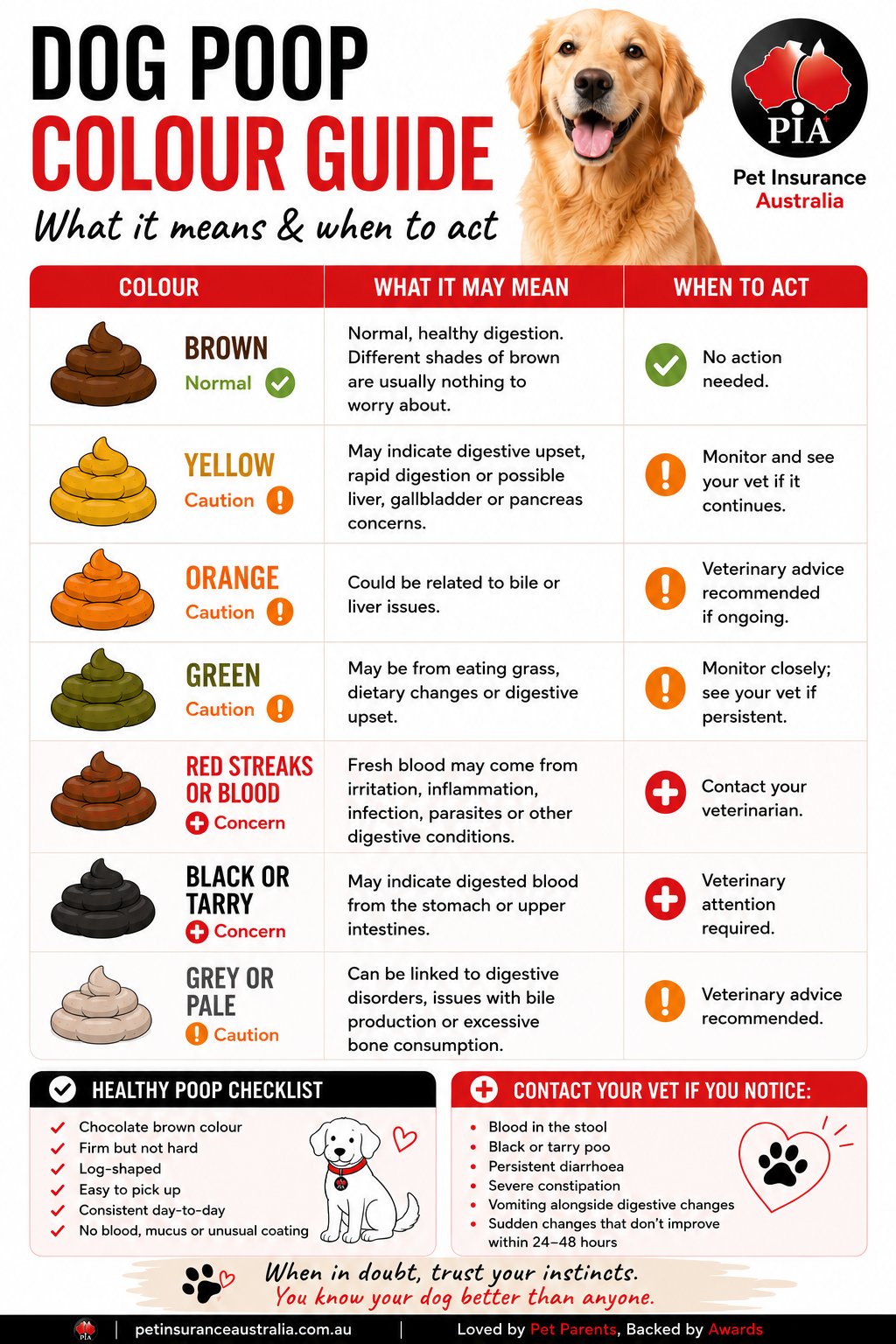
Healthy Poop Checklist
✔ Chocolate brown colour
✔ Firm but not hard
✔ Log-shaped
✔ Easy to pick up
✔ Consistent day-to-day
✔ No blood, mucus, or unusual coating
Contact Your Vet If You Notice:
❌ Blood in the stool
❌ Black or tarry poo
❌ Persistent diarrhoea
❌ Severe constipation
❌ Vomiting alongside digestive changes
❌ Sudden changes that don’t improve within 24 hours
The colour of your dog’s stool can provide important clues about their health. If your dog’s poop changes colour quickly or they show other symptoms, veterinary advice is paramount.
What Does Soft Or Runny Dog Poop Mean?
Every dog experiences an occasional upset stomach. A single episode of soft stool is not always cause for alarm. However, ongoing diarrhoea should never be ignored.
Common causes include:
- Eating something unusual
- Sudden diet changes
- Stress
- Parasites
- Food intolerance
- Bacterial infections
- Gastrointestinal disease
If diarrhoea lasts longer than 24 hours, contains blood, or is accompanied by vomiting, lethargy, or loss of appetite, immediate veterinary advice should be sought.
What About Hard Or Dry Dog Poop?
Hard stools may indicate:
- Dehydration
- Lack of dietary fibre
- Insufficient exercise
- Constipation
- Underlying medical conditions
Dogs that strain or vocalise repeatedly without producing a normal bowel movement should be examined by a veterinarian.
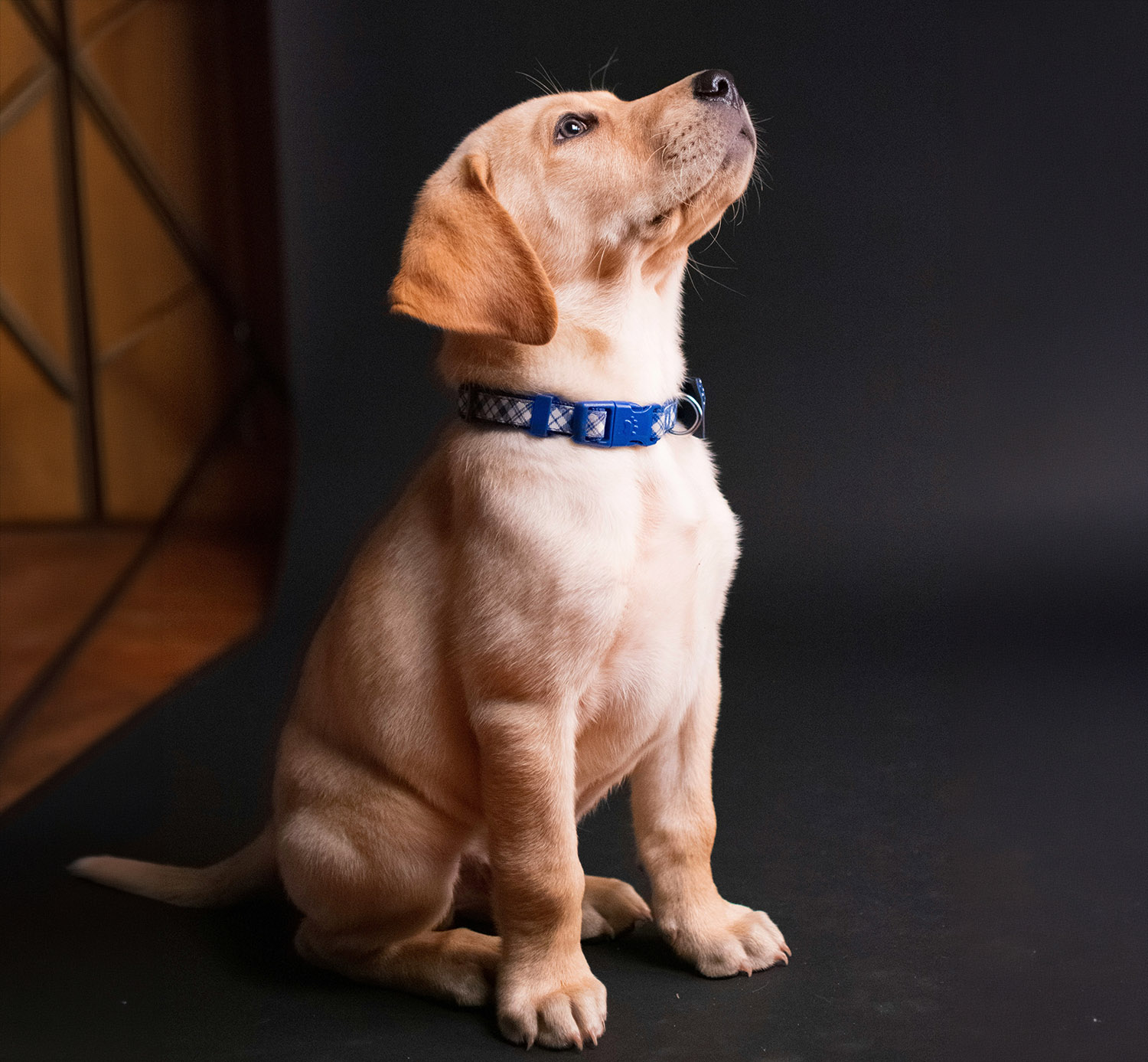
Puppies may poop more often than older dogs.
How Often Should Dogs Poop?
Most healthy adult dogs poop between one and three times per day. Puppies may go more frequently, while some dogs with highly digestible diets may go less often.
The most important factor is consistency. If your dog’s bathroom habits suddenly change without an obvious explanation, it’s worth monitoring closely.
When Should You See A Vet?
Contact your veterinarian if your dog experiences:
- Persistent diarrhoea
- Blood in the stool
- Black or tarry stools
- Severe constipation
- Straining
- Vomiting alongside digestive symptoms
- Loss of appetite
- Lethargy
- Sudden changes that don’t resolve
Trust your instincts. You know your dog’s normal habits better than anyone.
What Your Dog’s Poop Is Telling You
Checking your dog’s poop may not be the most glamorous part of pet ownership, but it can be one of the simplest ways to monitor their health. Healthy dog poo should be brown, firm, easy to pick up, and consistent from day to day.
If you notice significant changes in colour, consistency, frequency, or the presence of blood, it’s always worth speaking with your veterinarian. Sometimes the earliest signs of illness are hiding in plain sight…right there in the backyard.
Frequently Asked Questions
What colour should healthy dog poo be?
Healthy dog poop is typically medium to dark brown and should be consistent in colour from day to day.
What does unhealthy dog poop look like?
Unhealthy dog poop may be black, red, yellow, grey, excessively soft, watery, or unusually hard. Significant changes may indicate an underlying health issue.
Is soft dog poo always a problem?
Not necessarily. An occasional soft stool can occur after dietary changes or mild digestive upset. Persistent diarrhoea or repeated soft stools should be assessed by a veterinarian.
Why is my dog’s poo black?
Black or tarry stool can indicate digested blood from the upper digestive tract and should be treated as a veterinary concern.
How many times a day should a dog poop?
Most healthy adult dogs poop between one and three times daily, although this can vary depending on age, diet, and activity levels.
What does blood in dog poo mean?
Blood may be caused by irritation, parasites, infection, inflammation, dietary indiscretion, or more serious medical conditions. Veterinary advice is recommended if blood is present.
When should I worry about my dog’s poop?
You should contact a veterinarian if your dog has persistent diarrhoea, blood in the stool, black stools, severe constipation, vomiting, lethargy, or significant changes that don’t resolve within a day or two.
Sources & Further Reading
PetSure Pet Health Monitor 2025
Australia’s largest annual report examining pet health trends, veterinary treatment data, and common conditions affecting dogs and cats.
https://petsure.com.au/pet-health-monitor/
American Kennel Club (AKC)
How to Tell If Your Dog’s Poop Is Healthy
https://www.akc.org/expert-advice/health/dogs-poop-says-health/
VCA Animal Hospitals
Puppy Poop Colours and What They Can Mean
https://vcahospitals.com/pediatric/puppy/health-wellness/puppy-poop-colors-and-eco-friendly-scooping
Hill’s Pet Nutrition
Dog Poop Colour Chart and Other Characteristics
https://www.hillspet.com/dog-care/healthcare/dog-poop-color-and-health
Purina
Guide to Dog Poop: Colour, Consistency and Digestive Health
https://www.purina.co.nz/care-and-advice/dog/health/guide-to-dog-poop

Nadia Crighton is a renowned and accomplished professional in the fields of Journalism, Public Relations, and Writing, with an extensive career spanning over 25 years, 20 of which have been dedicated to promoting the health and well-being of pets.
Get the latest Pet Insider Tips & News
Error: Contact form not found.
We offer award-winning* pet insurance policies to protect your furry friend’s health and wellbeing. Get a quote today and give your pets the care they deserve.

Archives
Categories
- Cat Care (68)
- Cats (3)
- Dog Care (137)
- Guides (29)
- Health and Nutrition (210)
- Lifestyle and Activities (223)
- Media Release (66)
- Pet Care (260)
- Rescue Dogs (1)

